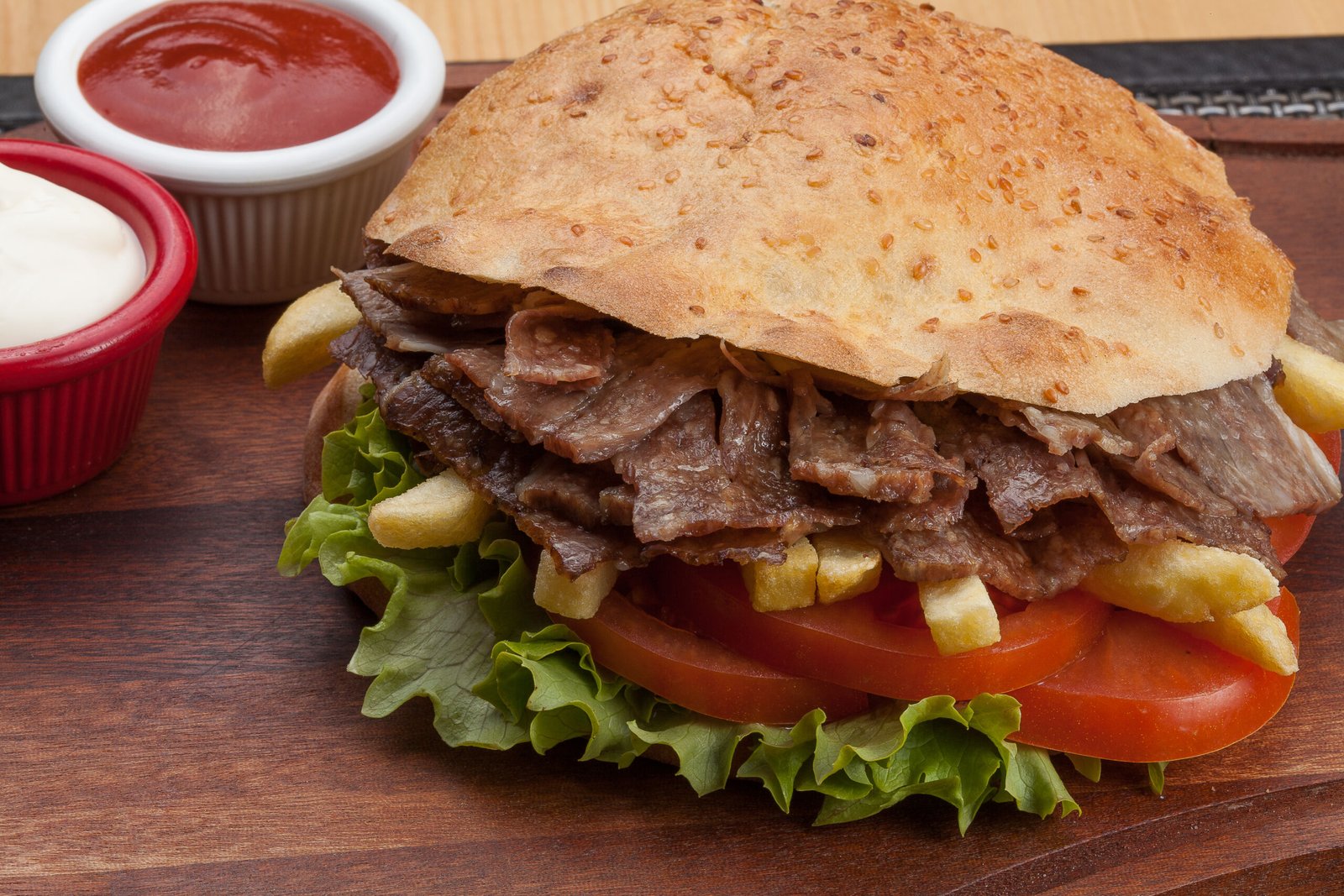
Doner vs. Shawarma vs. Gyro: What’s the Real Difference?
They All Look the Same. They’re Not.
A rotating spit of meat. Shaved thin. Served in bread. You’ve seen it in every city, in every neighborhood with a Middle Eastern or Mediterranean restaurant. You’ve probably ordered one without knowing exactly what you were getting.
Doner, shawarma, gyro. Three words. Three different cultures. Three distinct flavor profiles.
And there’s one that came first.
A Quick History: Who Started the Spinning Spit?
The rotating vertical spit — that signature image of meat slowly turning over an open flame — has a clear origin: Ottoman Turkey, mid-1800s.
The technique is credited to Iskender Efendi, a chef from Bursa, who around 1860 took the traditional horizontal lamb roast and turned it vertical. This allowed the fat to baste the meat as it cooked and made it possible to shave off thin, ready-to-eat slices continuously throughout the day.
That original dish was called doner kebab — “doner” meaning “rotating” in Turkish.
From there, the concept spread across the Middle East, the Mediterranean, and eventually the entire world. Different cultures adapted it to local ingredients, spices, and bread traditions. Shawarma developed through the Arab world. Gyro took hold in Greece. Each one evolved into something distinct.
But the spinning spit? That’s Turkish.
Doner Kebab: The Original
Where it’s from: Turkey
Meat: Traditionally lamb, now commonly beef, chicken, or a mix — often layered with fat for moisture
Spices: Earthy and warm — cumin, paprika, oregano, black pepper, sometimes cinnamon or allspice
How it’s served: In Turkish flatbread (lavas or pide), over rice (doner rice plate), or in a durum wrap — typically with fresh tomatoes, onions, and parsley
What makes it different: The marinade is relatively subtle. The meat flavor leads. The accompaniments are fresh and light — no heavy sauces drowning everything out.
Authentic doner has a specific chew and layering to it from how the meat is stacked and pressed before cooking. When it’s done right, each slice has crispy edges and a juicy interior.
Shawarma: The Middle Eastern Version
Where it’s from: Arab world — Lebanon, Syria, Egypt, Jordan, Israel
Meat: Chicken is most common; also lamb, beef, or mixed — often marinated overnight
Spices: More aggressive and complex — turmeric, coriander, garlic powder, cardamom, cinnamon, clove
How it’s served: In pita or flatbread with tahini, garlic sauce (toum), pickles, and sometimes french fries inside the wrap
What makes it different: The sauce. Shawarma is defined by tahini or garlic aioli. The spice profile is bolder. The overall flavor is louder. Shawarma is also more likely to include pickled vegetables and a heavier garnish.
Gyro: The Greek Take
Where it’s from: Greece
Meat: Pork is most traditional (especially in Greece itself); outside Greece, chicken and lamb are common
Spices: Garlic-forward — oregano, thyme, rosemary, lemon. Mediterranean herb profile.
How it’s served: In thick, slightly chewy pita with tzatziki (yogurt-cucumber-dill sauce), tomato, onion, and often french fries
What makes it different: Tzatziki is the defining element — cool, creamy, tangy. The pita is thicker than doner bread. Pork is the authentic protein, which you won’t find in doner or shawarma.
Side-by-Side Comparison
Quick Comparison
Origin: Doner = Turkey (1860s) | Shawarma = Arab world | Gyro = Greece
Traditional meat: Doner = Lamb/beef | Shawarma = Chicken/lamb | Gyro = Pork/chicken
Spice profile: Doner = Earthy, mild | Shawarma = Bold, warm, complex | Gyro = Herby, garlicky
Signature sauce: Doner = Fresh tomato + parsley | Shawarma = Tahini or garlic | Gyro = Tzatziki
Common in U.S.? Doner = Limited | Shawarma = Yes, major cities | Gyro = Very common
The “Gyro Near Me” Search Problem
Here’s something interesting: “gyro” is the most commonly searched version in the United States — even when people are actually eating doner or shawarma. Why?
Because Greek restaurants in America multiplied early and fast. They put the word gyro on signs across the country. Now that word dominates search behavior even for people who’ve never been to Greece.
If you’ve been searching “gyro near me” or “shawarma near me” in Miami — you might actually be looking for doner kebab and not know it.
The cuts are similar. The presentation is similar. But the flavor is different. And once you’ve had real doner, the difference is hard to ignore.
What Makes Miami’s Doner Scene Different
Miami has shawarma spots and Greek restaurants. But authentic Turkish doner — the original — is harder to find.
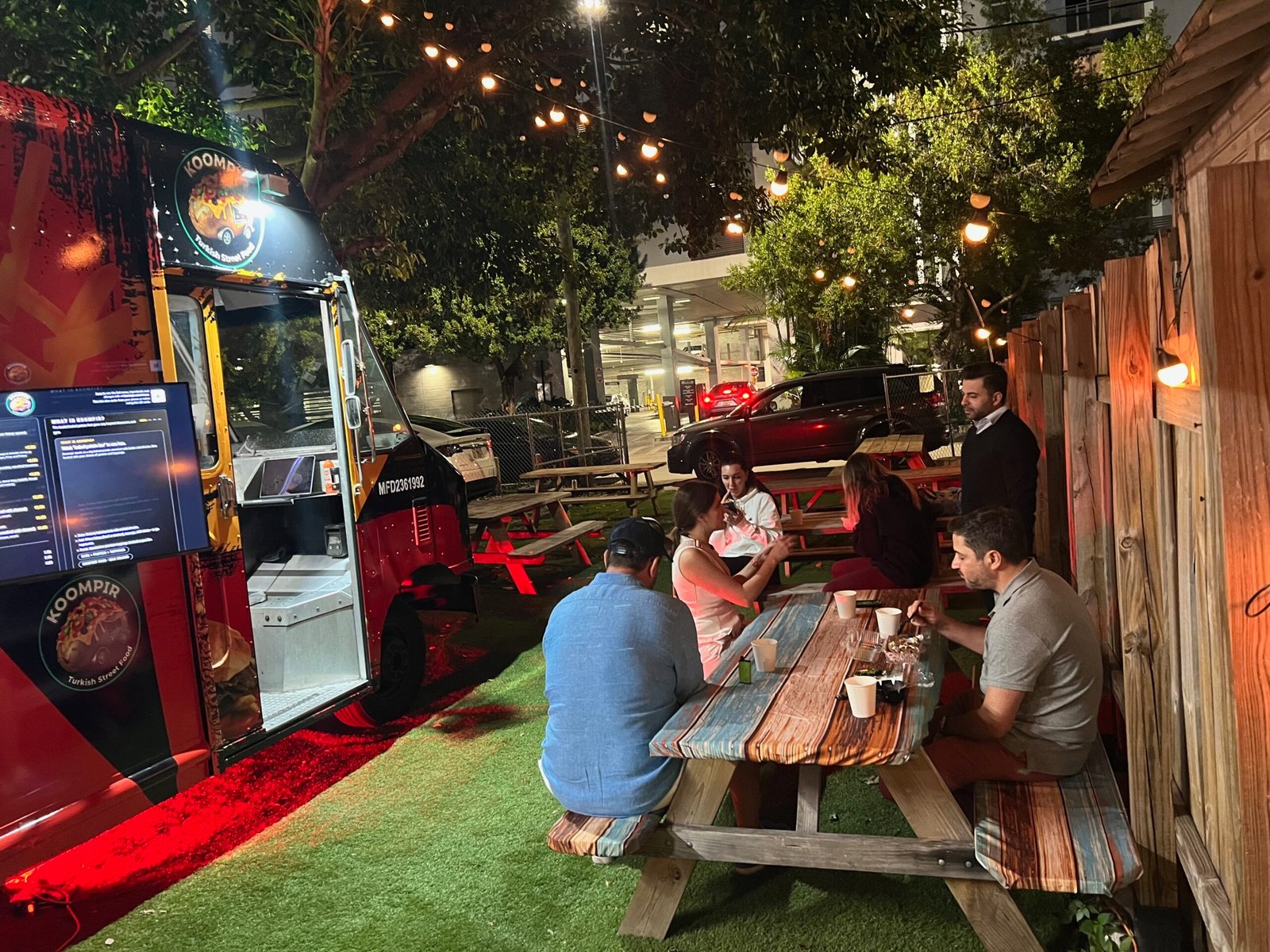
Koompir serves doner the Turkish way: seasoned with the traditional spice blend, shaved fresh, and offered multiple ways — as a rice plate, in bread, as a wrap, or as a toasted cheese durum. No heavy sauces covering up the meat. Fresh accompaniments. The way it was meant to be eaten.
We’re located at 156 NE 28th Street in Midtown Miami, minutes from Wynwood and the Design District. Open late on Fridays and Saturdays.
Which One Should You Try?
Honestly? Try all three. But if you want to start at the source — the dish that spawned the others — doner kebab is the one.
It’s cleaner. More straightforward. The meat is the star. There’s a reason it’s been eaten on the streets of Istanbul for over 160 years without needing much reinvention.
Try the Original Doner Kebab
Miami’s Turkish street food truck. Authentic doner, kumpir, and more. Open late on weekends.
Order Online