What Is Sucuk? Turkey’s Addictive Spiced Sausage
You’ve Had Chorizo. You Haven’t Had This.
The first time most Americans encounter sucuk, they reach for a comparison. “Is it like chorizo?” Close enough to understand the category. Far enough that the comparison doesn’t really hold.
Sucuk (pronounced soo-jook) is a dry, fermented beef sausage seasoned with a spice blend that’s distinctly Turkish — heavy on cumin, garlic, and red pepper, with none of the smoky paprika that defines Spanish chorizo. The result is something deeper, more pungent, and more complex than most Western sausages.
It’s been a fixture of Turkish breakfast tables, street sandwiches, and home kitchens for centuries. In Turkey, you don’t just eat sucuk — you grow up with it. The smell of it hitting a hot pan in the morning is as deeply embedded in Turkish food memory as bacon is in American culture.
What Exactly Is Sucuk?
Sucuk is a dry-cured, fermented beef sausage — though some regional versions mix in lamb. The meat is ground, combined with fat and a heavy spice blend, then packed into natural casings and left to ferment and dry for anywhere from a few days to several weeks.
The fermentation is what gives sucuk its distinctive tang and its firm, almost waxy texture when raw. When cooked, it transforms: the fat renders out, the exterior crisps up, and the spices bloom into something much more aromatic and intense than the raw sausage suggested.
Unlike fresh sausages that need to be cooked through from a raw state, sucuk is already cured. A few minutes in a pan is all it needs.
The Spice Profile: What Makes Sucuk Taste Like Sucuk
- Cumin — The dominant note. Earthy, warm, and assertive. This is what makes sucuk immediately identifiable as Turkish.
- Garlic — Used heavily. More than you’d expect. It mellows during curing but reasserts itself when the sausage hits heat.
- Red pepper — Both sweet and hot varieties. Gives sucuk its color (deep red-brown) and its heat level.
- Allspice and black pepper — Background depth and warmth.
- No paprika — This is the key distinction from chorizo. The red color comes entirely from red pepper.
- No pork — Sucuk is made from beef (or lamb). This matters for halal dietary requirements.
Sucuk vs. Chorizo: The Real Comparison
Quick Comparison
Meat: Sucuk = Beef/lamb | Spanish Chorizo = Pork | Mexican Chorizo = Pork
Key spice: Sucuk = Cumin + garlic | Spanish = Smoked paprika | Mexican = Chili + vinegar
Texture (cooked): Sucuk = Crispy edges, juicy center | Spanish = Varies | Mexican = Crumbles
Pork-free? Sucuk = Yes | Chorizo = No
Fermented? Sucuk = Yes | Spanish = Yes/No | Mexican = No
Flavor tone: Sucuk = Garlicky, cumin-forward, funky | Spanish = Smoky, sweet | Mexican = Acidic, chili-heavy
If you like chorizo, you’ll probably like sucuk. But don’t expect them to taste similar.
How Sucuk Is Eaten in Turkey
Sucuk Ekmek — The Street Sandwich
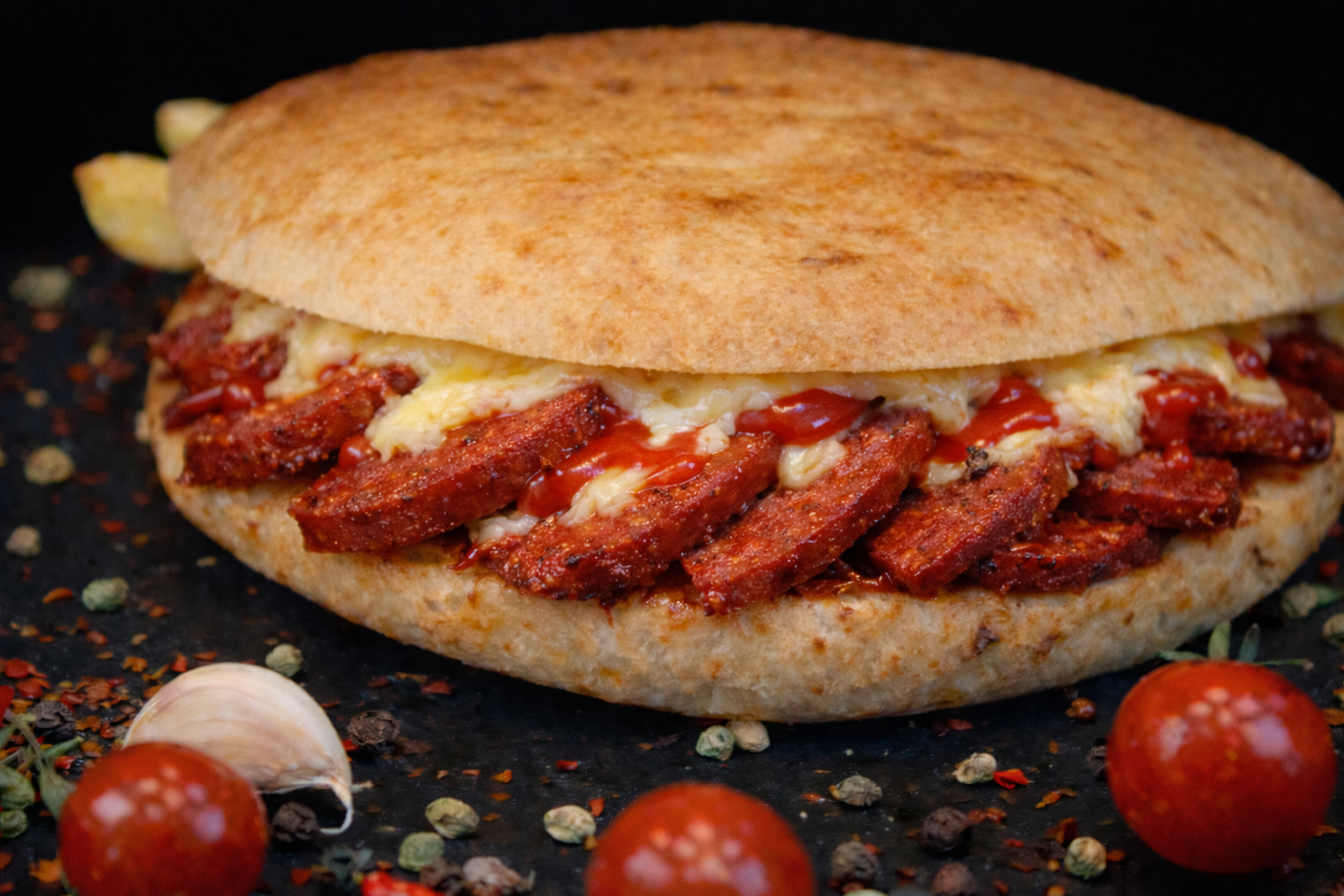
The most iconic street-food application. Sliced sucuk is cooked on a griddle until the edges crisp and curl slightly, then loaded into a crusty bread roll with melted kasar cheese on top. Sometimes a fried egg gets added.
It’s the Turkish equivalent of a breakfast sandwich — except it’s eaten at any hour, from morning to midnight.
At Koompir, Sucuk Ekmek is on the menu exactly as you’d find it on an Istanbul sidewalk: griddled sucuk, kasar, crusty bread. No reinvention. Just the original.
Turkish Breakfast (Kahvalti)
In the traditional Turkish breakfast spread — which is elaborate by any standard — sliced sucuk appears alongside eggs, white cheese, tomatoes, cucumbers, olives, and bread. It’s often pan-fried in its own rendered fat, which then gets used to fry eggs directly in the same pan. The eggs pick up the spiced fat. The result is extraordinary.
Sucuk and Eggs
Pan-fry sucuk slices until they crisp slightly. Crack eggs into the same pan, letting them cook in the rendered sucuk fat. That’s it. One of the most effortless high-flavor breakfasts in any cuisine.
On Pide and Pizza
Sucuk is one of the most popular toppings on Turkish pide (flatbread) and lahmacun. The spiced fat soaks into the dough during baking and perfumes everything around it.
Why Sucuk Works So Well with Cheese
Kasar — the mild, stretchy cheese used throughout Turkish street food — provides a creamy, neutral counterpoint to sucuk’s intensity. The fat from the sucuk and the fat from the cheese melt together, creating a unified richness that neither has alone.
The same logic applies in kumpir: when sucuk is added as a topping to the butter-and-kasar mashed potato base, the spiced meat fat works its way into the creamy filling and elevates the entire thing.
Is Sucuk Halal?
Yes. Traditional sucuk is made entirely from beef (or lamb) and contains no pork products. This makes it one of the few cured sausages that fits comfortably into halal dietary requirements. At Koompir, the sucuk we use is beef-based.
Where to Find Sucuk in Miami
Sucuk is available at some Middle Eastern and international grocery stores in Miami — you can find it vacuum-packed in the deli section.
But if you want it cooked and served the way it’s meant to be — griddled until the edges crisp, loaded into bread with melted kasar — Koompir is your spot.
We serve Sucuk Ekmek at 156 NE 28th Street in Midtown Miami, open Tuesday through Sunday. Friday and Saturday until 11:30 PM.
It’s one of those dishes that takes two minutes to describe and about thirty seconds to become your new favorite thing.
Try Sucuk Ekmek at Koompir
Sucuk Ekmek, Kumpir, Doner Kebab — Istanbul street food in Midtown Miami.
Order Online